MOUNTAIN HOUSE
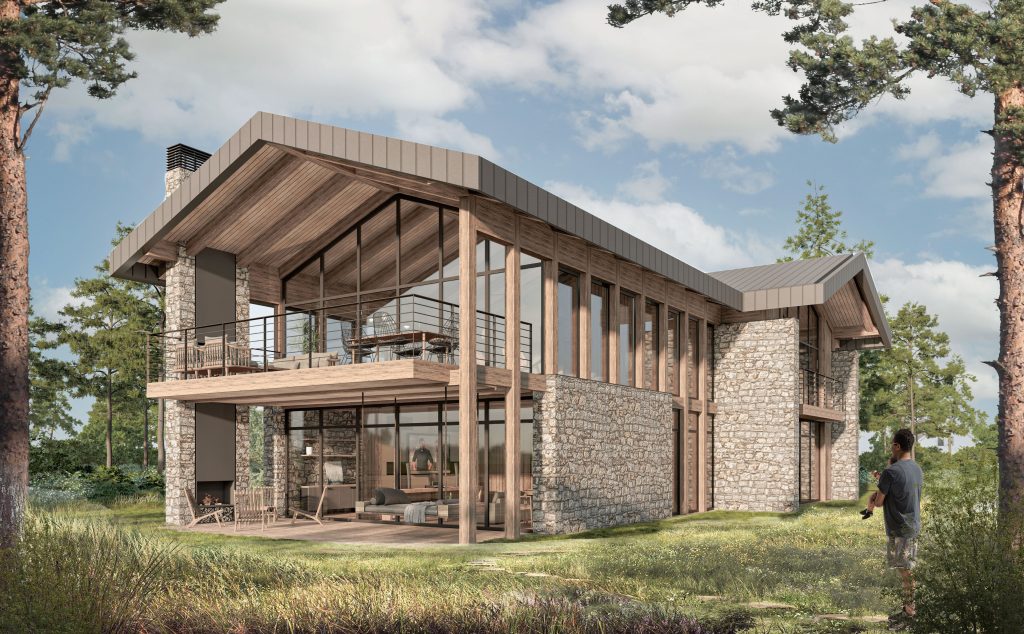
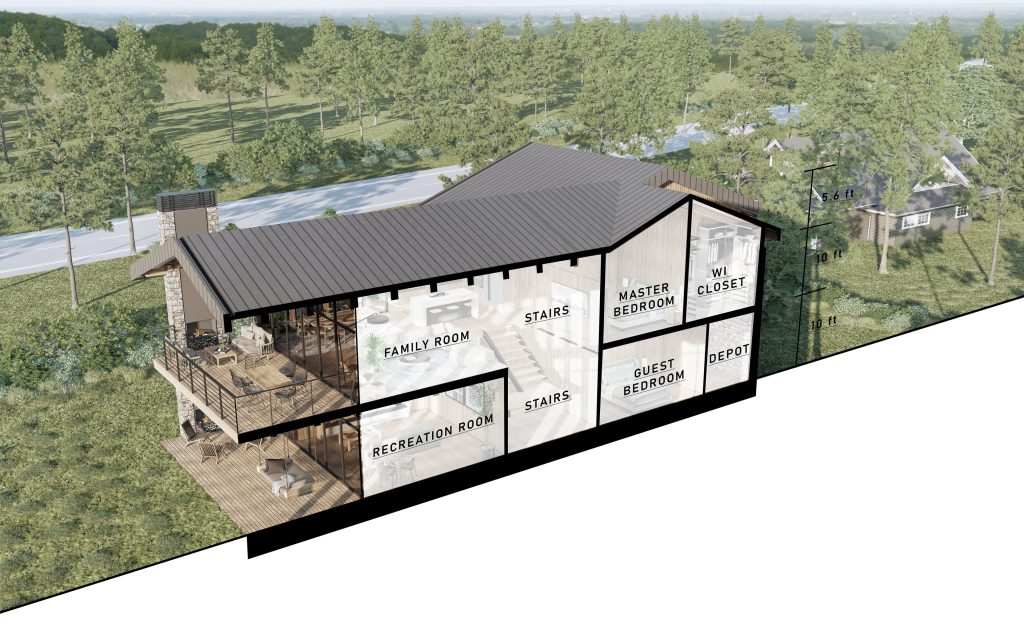
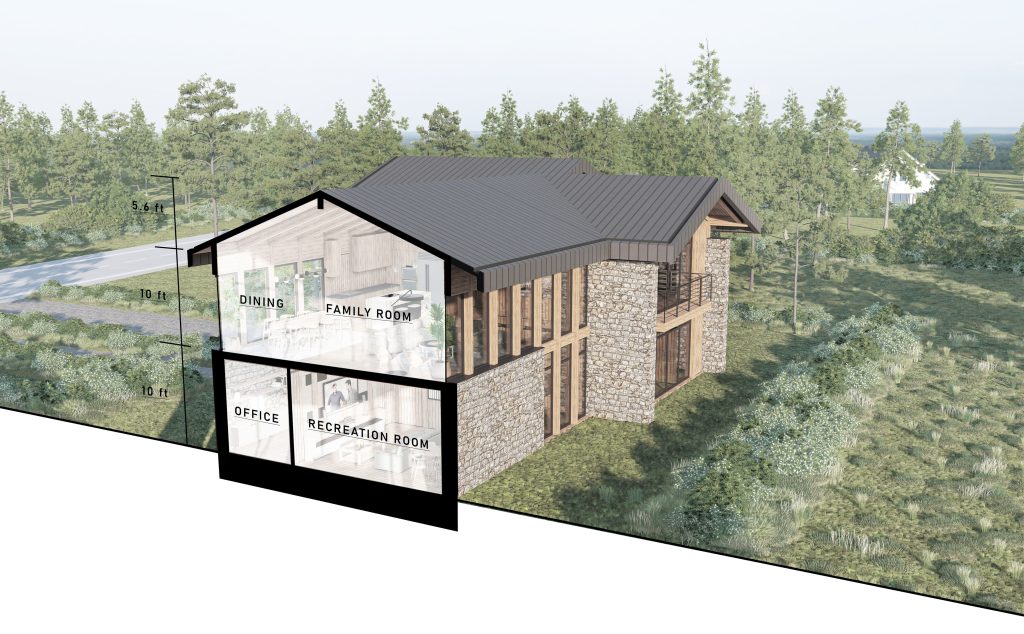
Guided by environmental factors such as landscape, sunlight, wind, and noise, the design synthesizes modern and rustic influences within a cohesive living environment. Utilizing the footprint of the pre-existing garage, the architectural form is defined by the intersection of two primary masses—communal and private. This junction serves as the main entry point and the core node for both horizontal and vertical circulation.
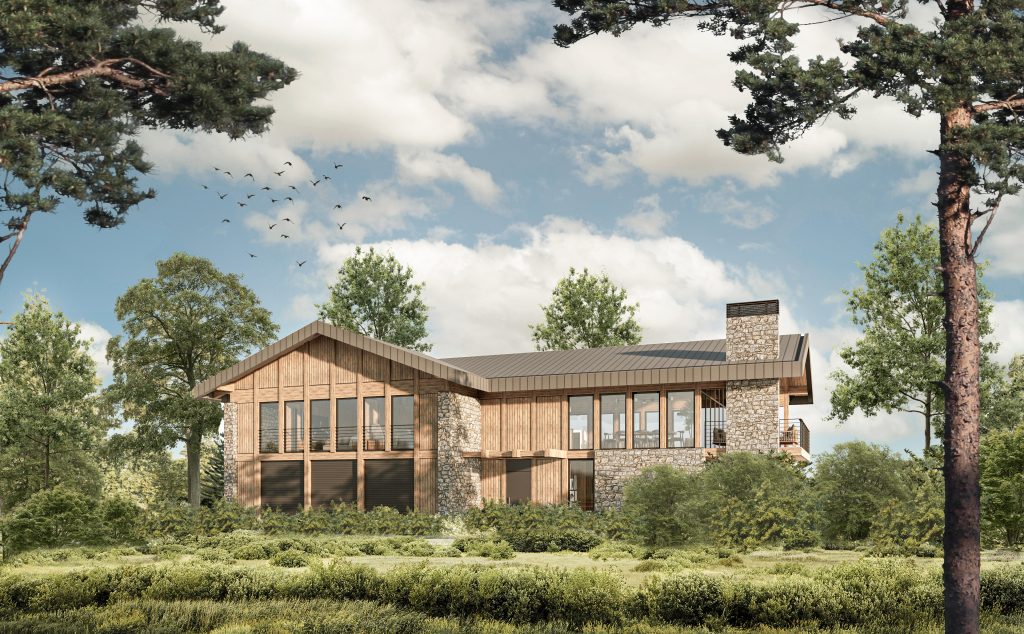
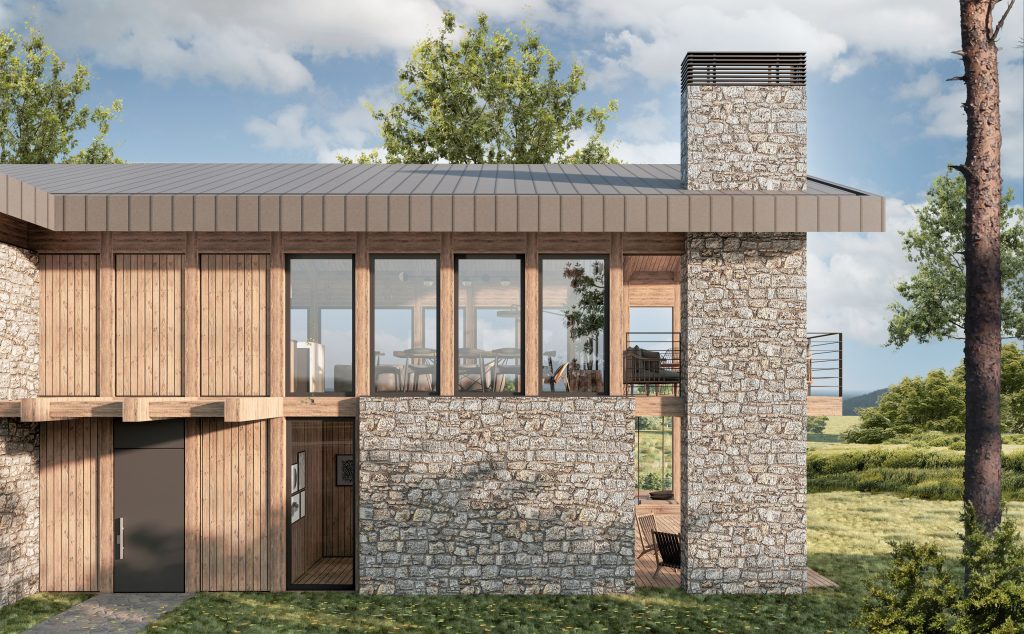
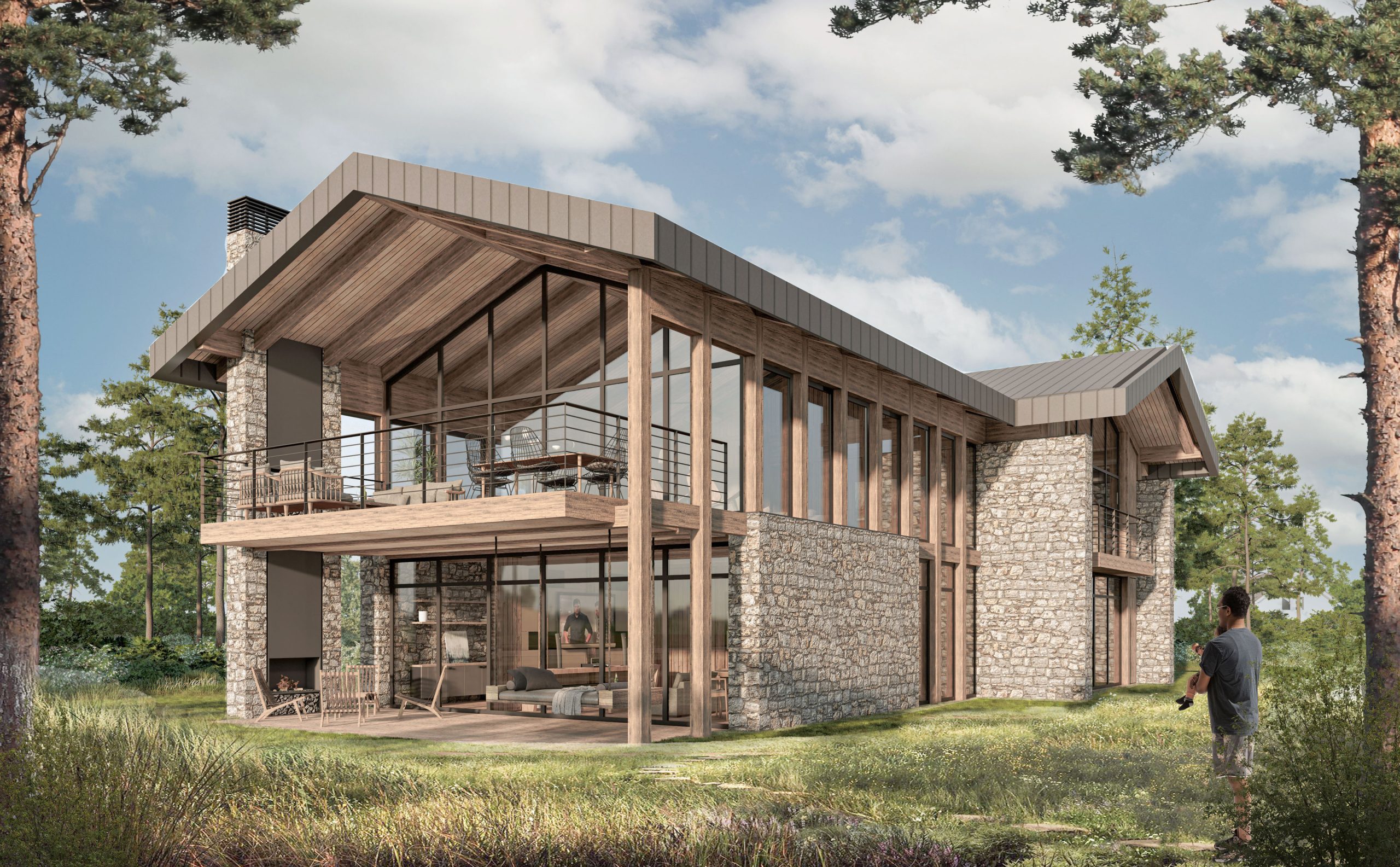
The structural identity is rooted in a hybrid system of masonry stone and timber framing, exposed throughout the interior and exterior to manifest structural honesty. The facade responds to its orientation with varying transparency: the west and south elevations are highly glazed to maximize garden views and sunlight, while the north facade is designed with limited openings to shield against prevailing winds and highway noise. The east facade remains a solid mass to ensure privacy from the adjacent property.
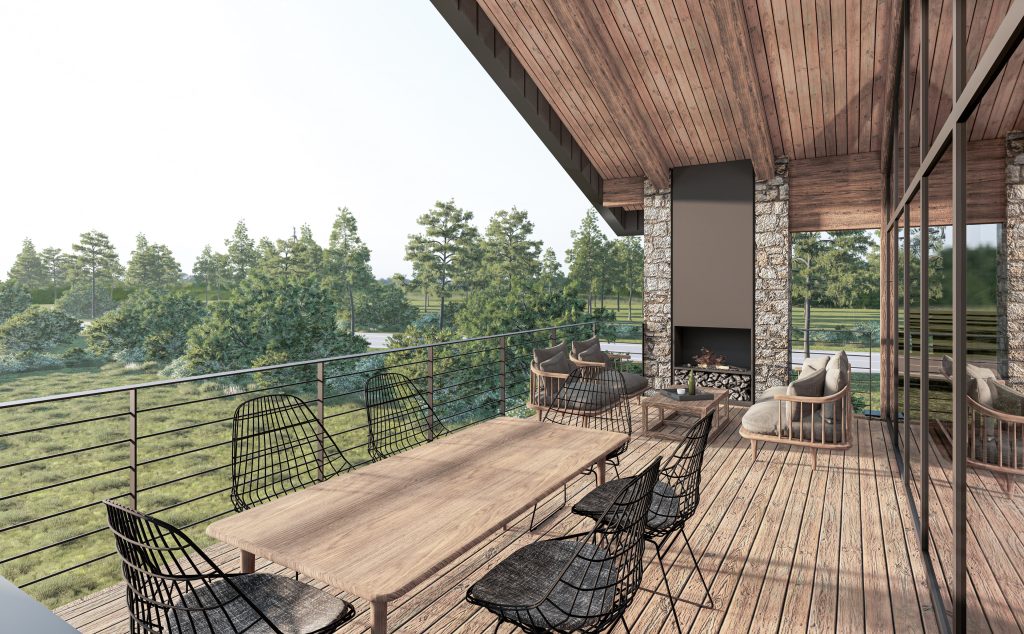
The material palette reinforces this dual character, pairing timber and stone with contemporary black aluminum joinery and metal roofing. The continuity of timber flooring from the interiors to the balconies creates a warm atmosphere, while expansive terraces with integrated fireplaces blur the boundaries between indoor and outdoor living.