YOUTH CAMP CONCEPT
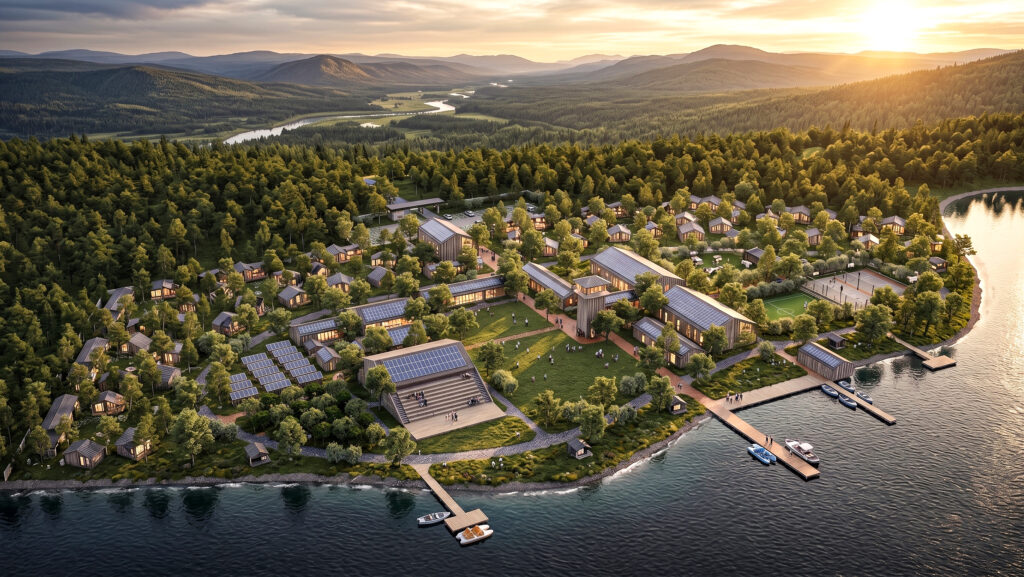
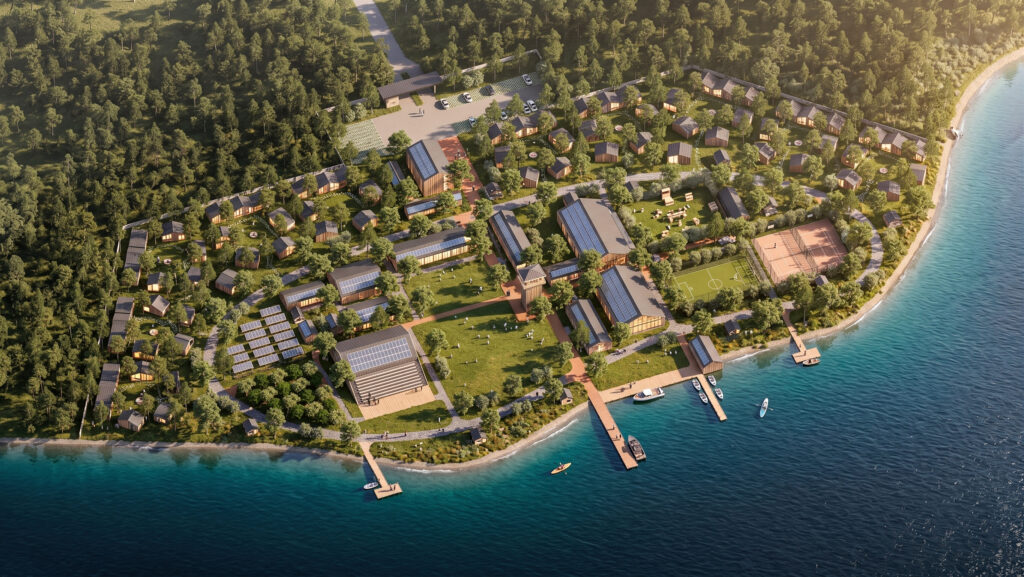
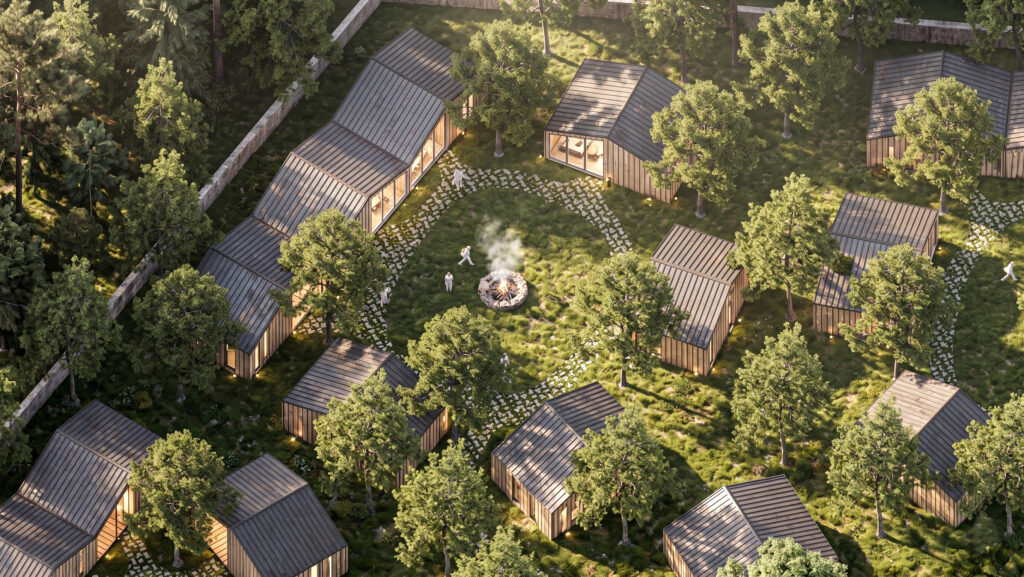
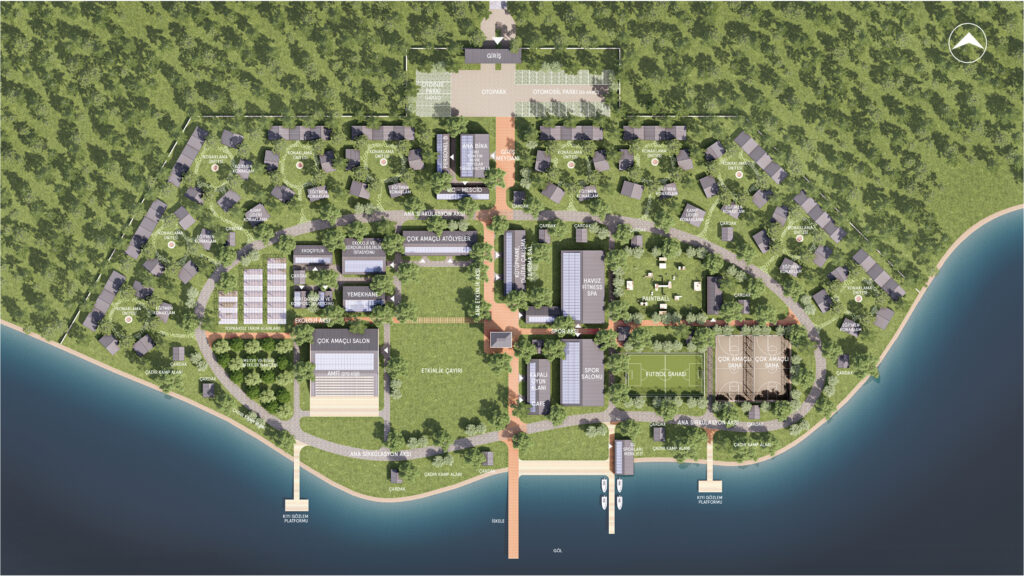
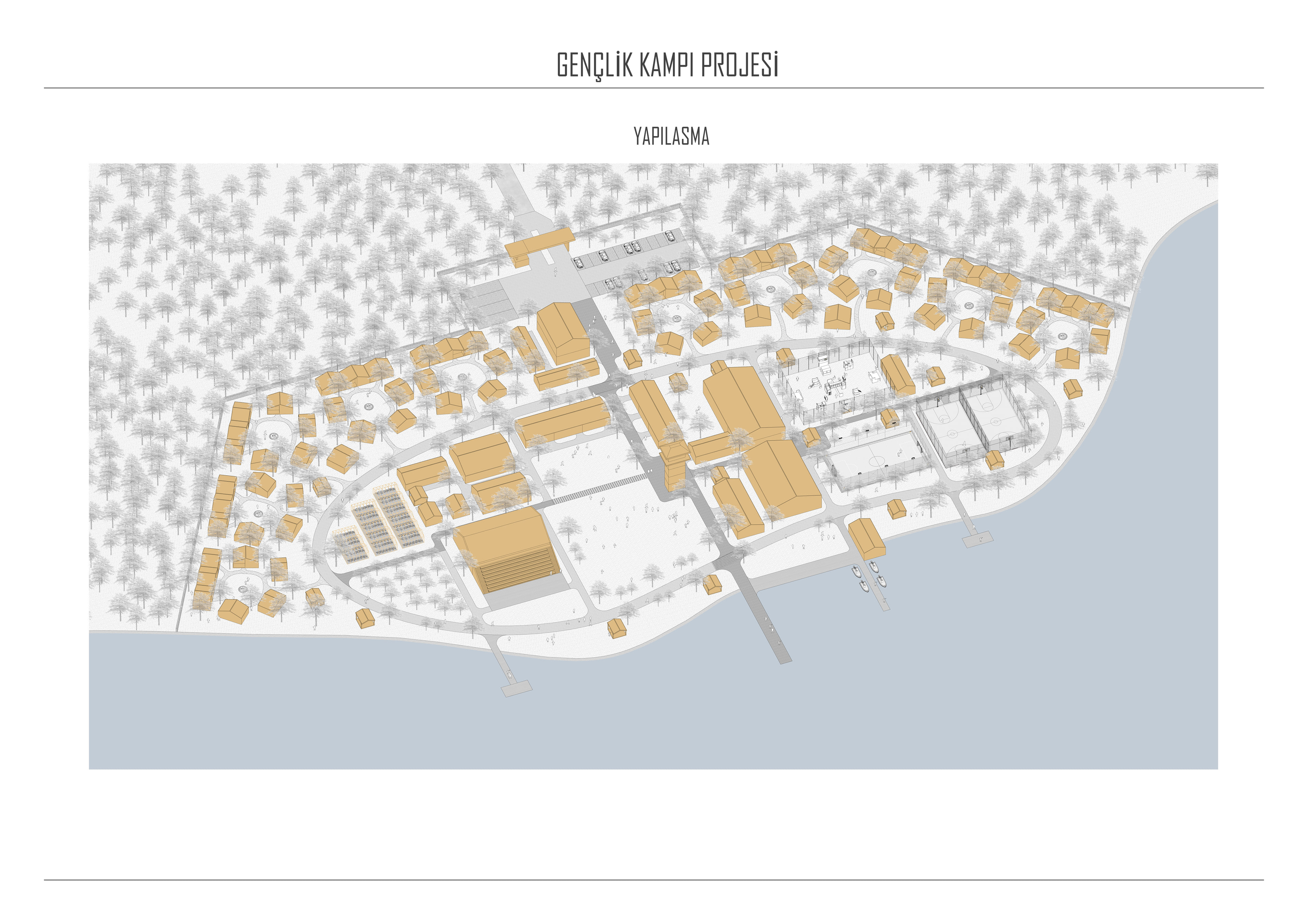
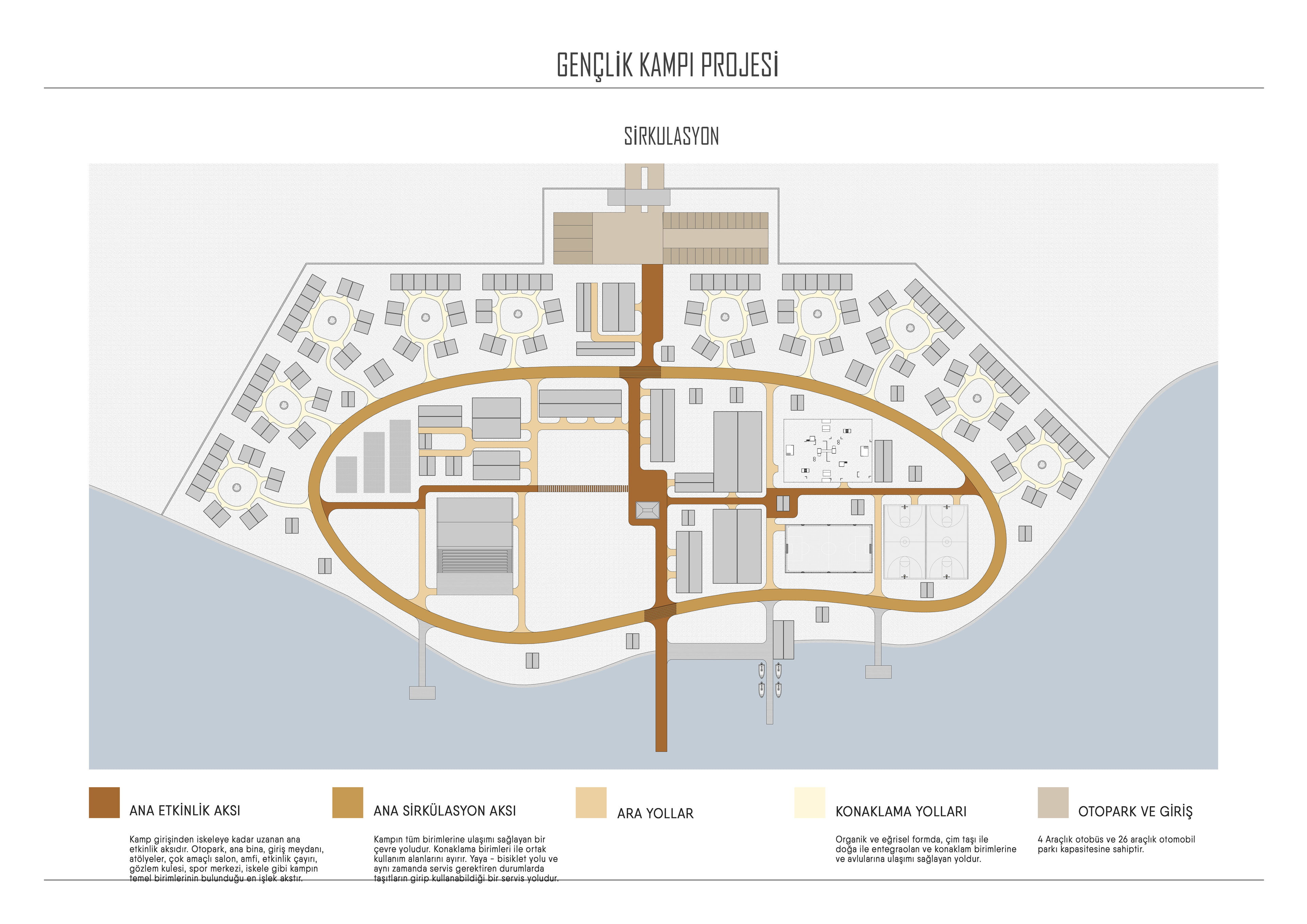
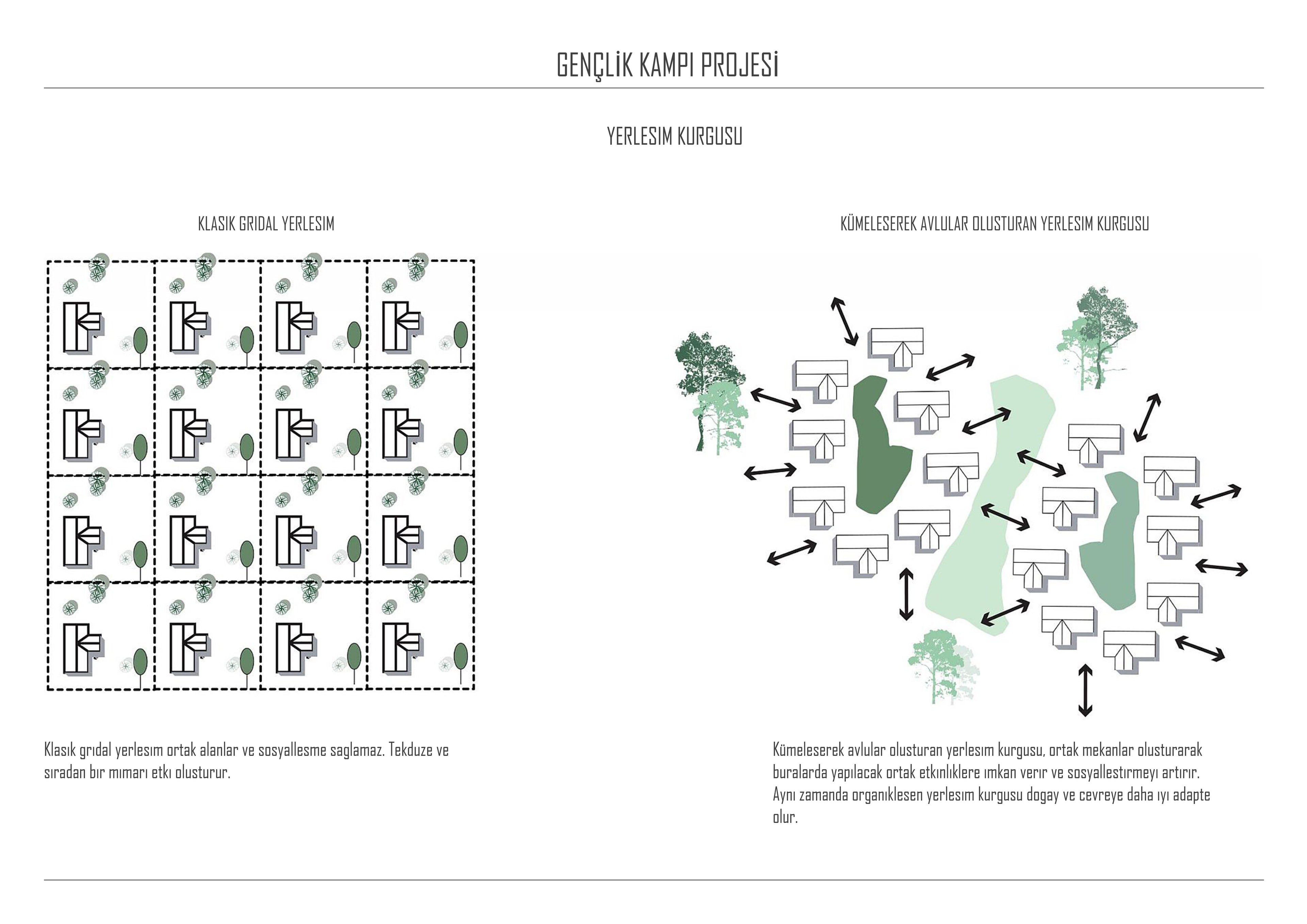
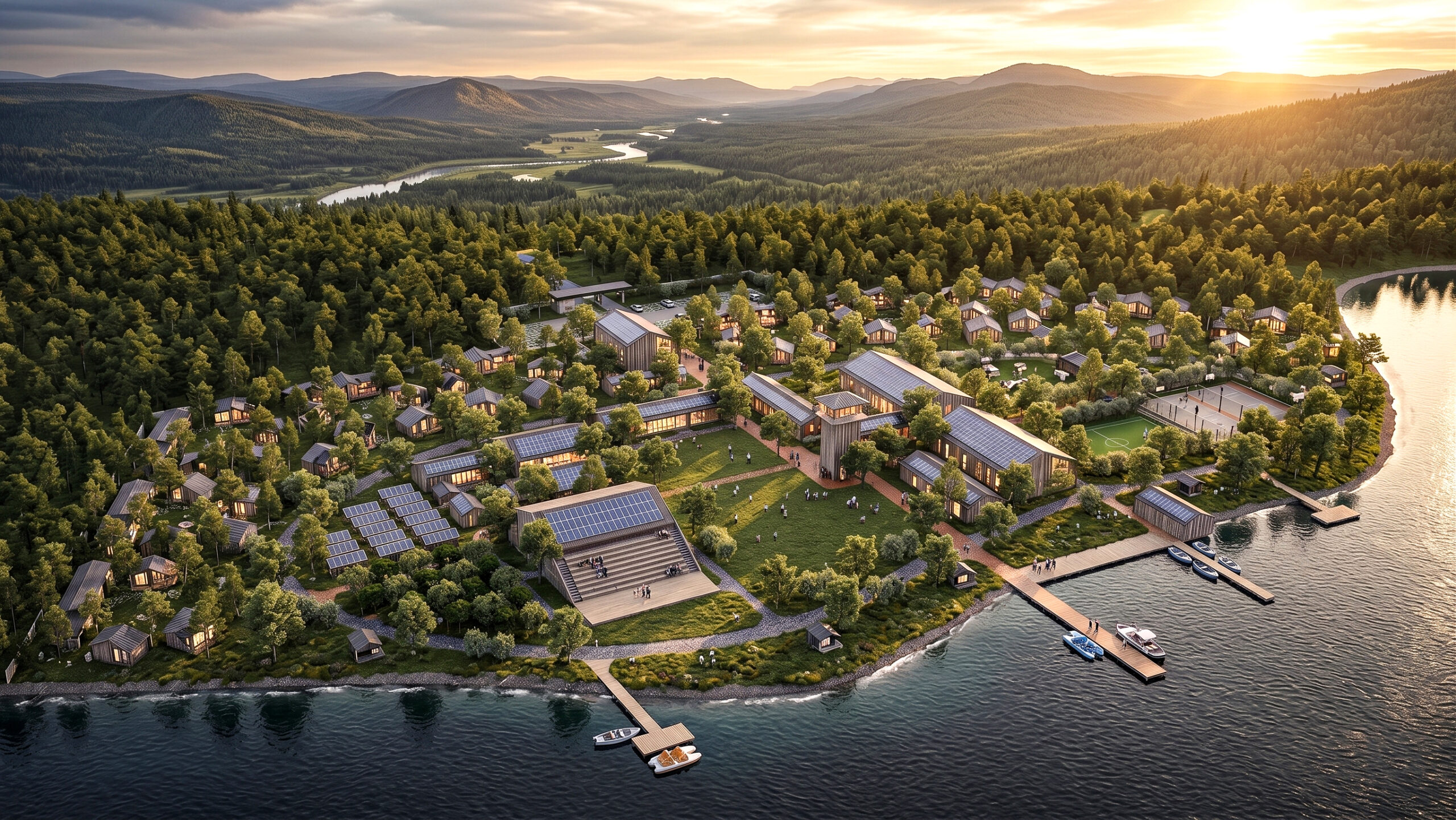
Situated at the intersection of the coastal strip and dense forest texture, this campus is an integrated design aimed at enabling young people to reconnect with the rhythm of nature away from urban routines and build a common community spirit through collective living practices. The design places peer interaction, a culture of co-production, and learning through nature at its heart, offering a life scenario where young people are not just occupants but active participants. In this context, the project rejects rigid “grid plan” schemes and adopts an organic settlement strategy that adapts to the topography and existing vegetation by “clustering to create courtyards.”
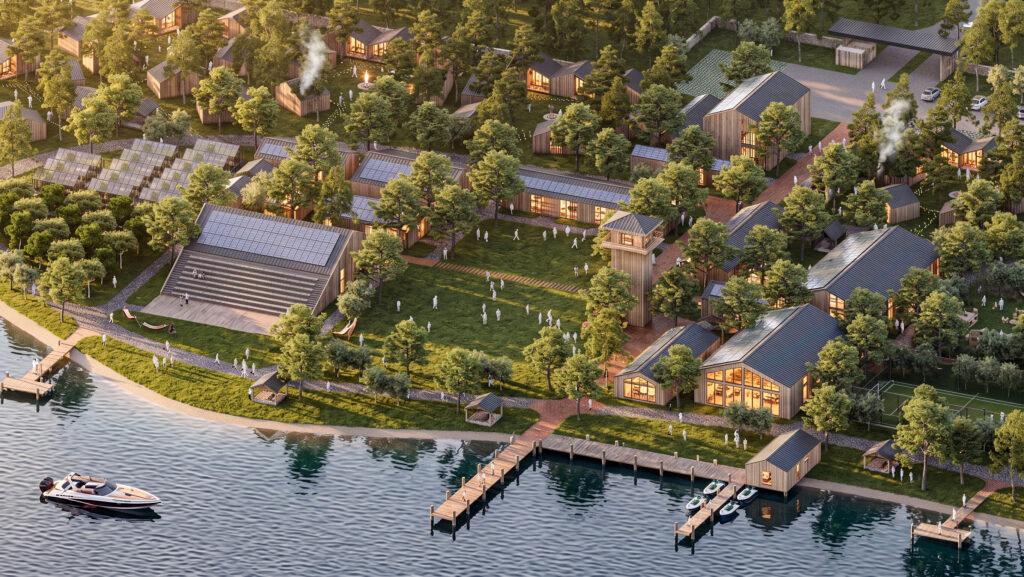
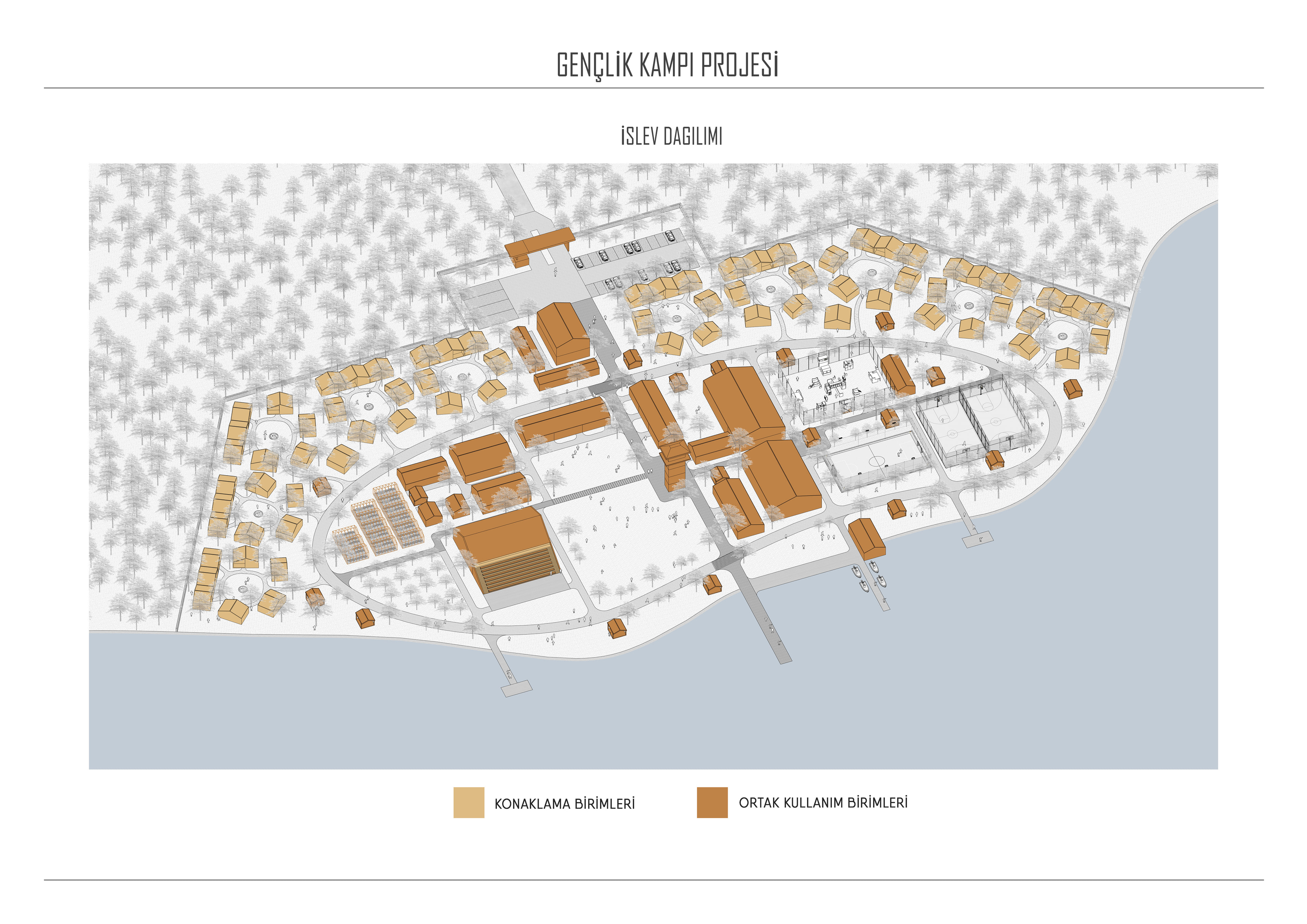
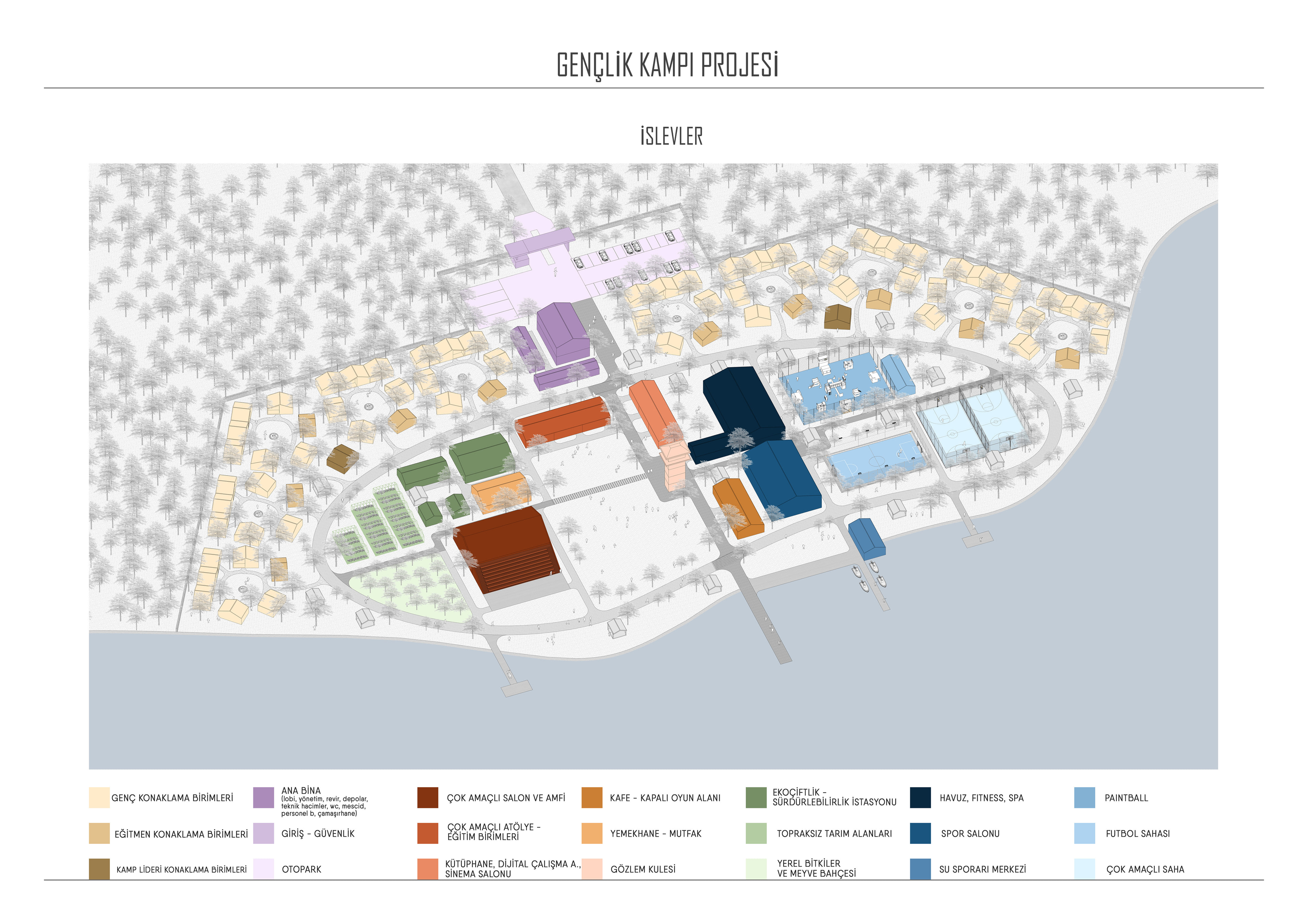
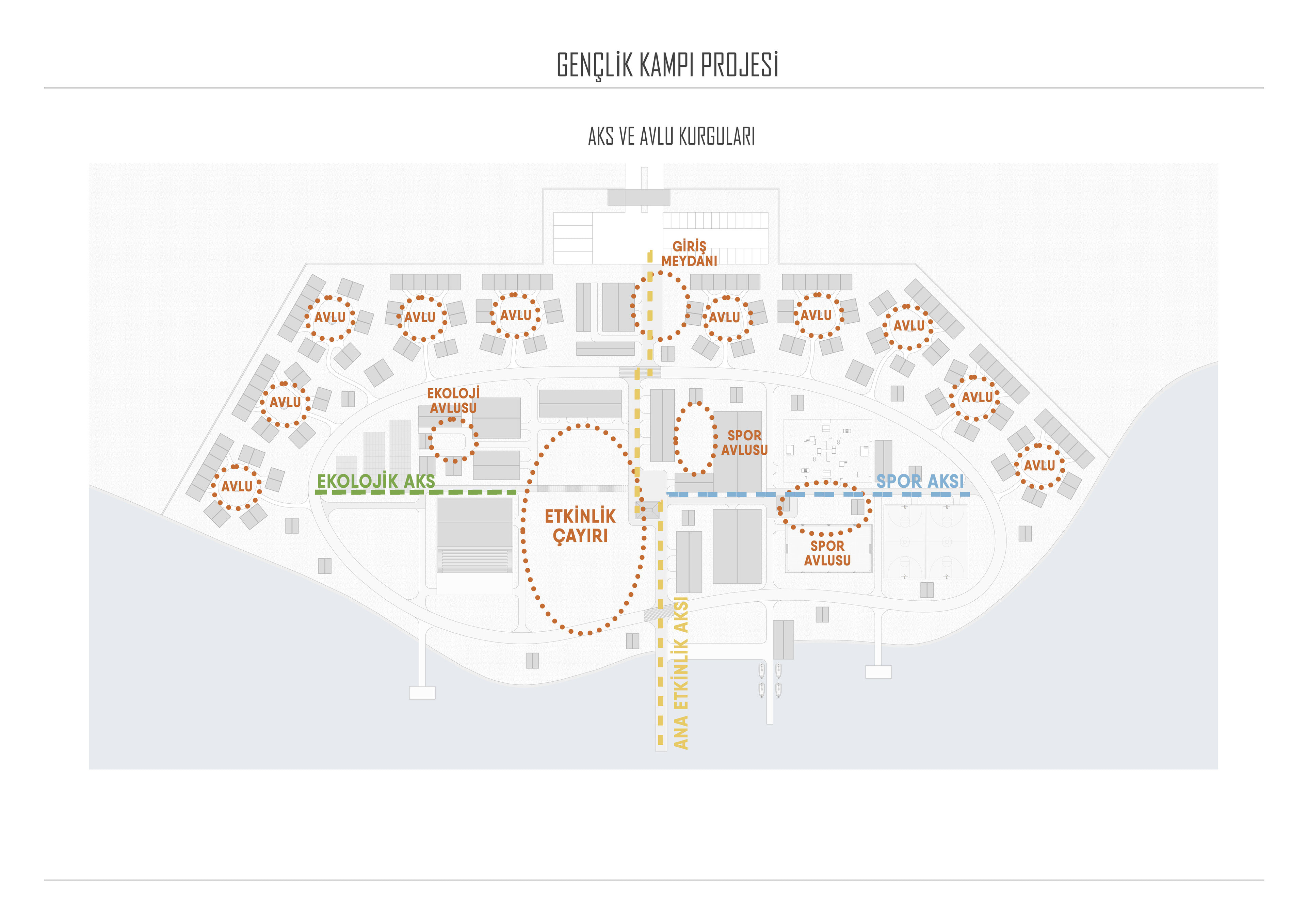
This clustering logic creates sheltered micro-social spaces where young people can establish a sense of belonging in small groups, translating the project’s primary goal of “building a strong sense of community” into a spatial reality. The overall organization of the campus is built upon thematic axes connecting various functional needs. The ecological axis reunites youth with the cycles of nature, while the sports axis along the shoreline maximizes physical development and active living. The fragmented structure of the accommodation units permeating the forest and their internal courtyard arrangements encourage spontaneous encounters and open the doors to a shared life.
The expansive “Activity Meadow” at the heart of the settlement, accompanied by the outdoor amphitheater, serves as the central hub where collective sharing and social life reach their peak in the open air. The minimalist and eco-friendly material language reinforces the tectonic harmony between the structures and their environment, while the piers along the coast transform the camp experience into a holistic ecosystem. With its fragmented massing, rich hierarchy of open spaces, and pedagogical approach that fosters social and personal growth, the Youth Camp Campus presents a sustainable and inspiring vision of the future within nature.