TARSUS WATERFALL AREA & TOURISM FACILITY CENTER
The project derives its name from the synthesis of Tarşa—the oldest Hittite name for Tarsus—and Dem, representing breath, time, and the essence of maturity. Tarşa Dem positions architecture not as an isolated object of production, but as a “moment” and “space” that filters through the layers of a deep-rooted past to become an inseparable part of the natural ecosystem. The waterfall and existing vegetation, as the primary site inputs, dictate the reference points of the mass composition, echoing the timelessness of the water and the spirit of the ancient geography.
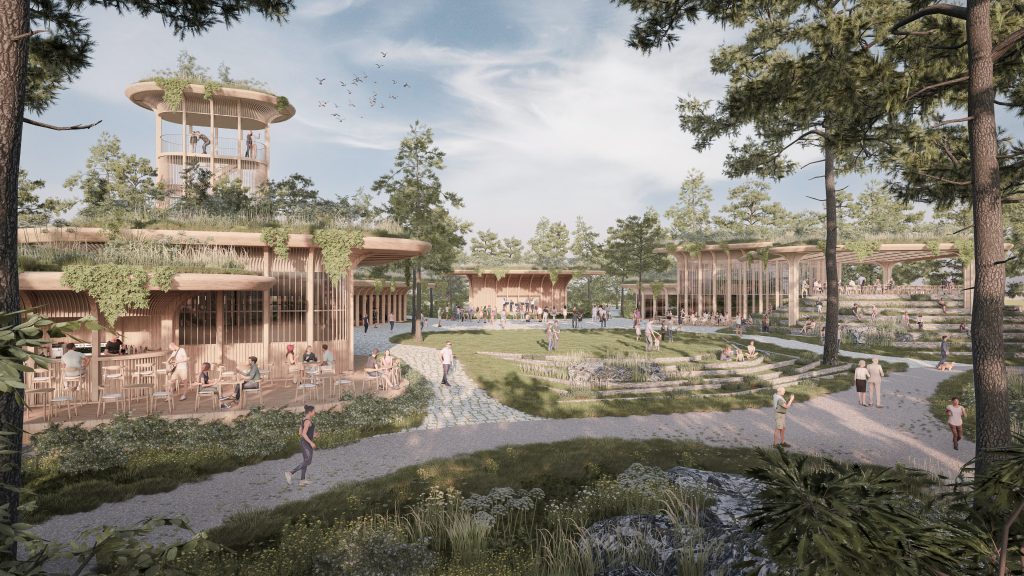
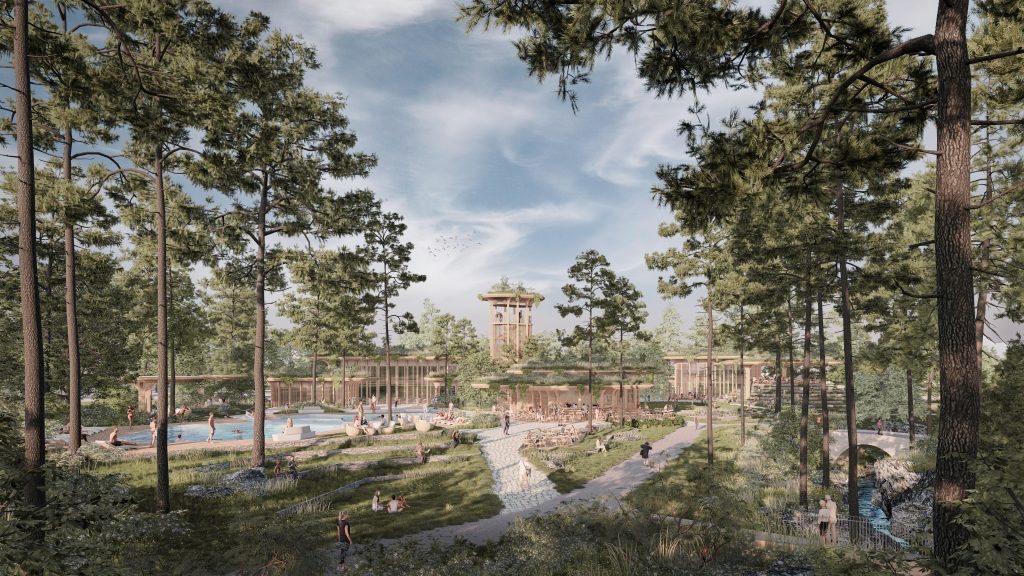
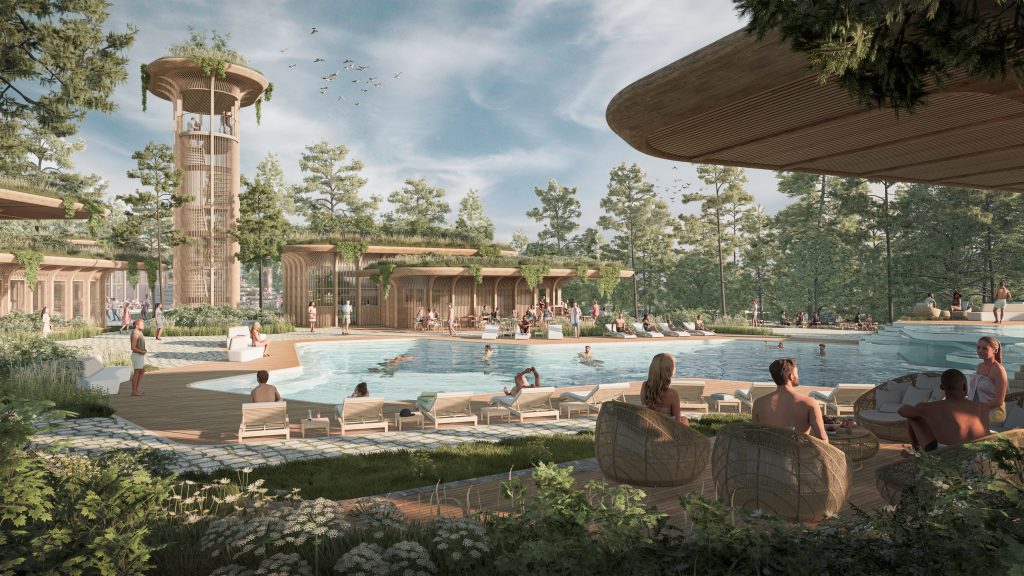
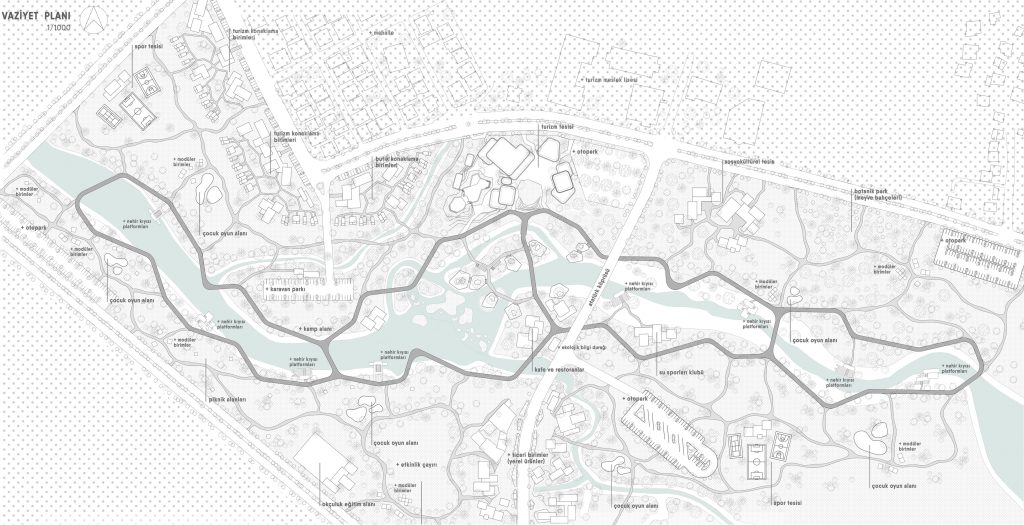
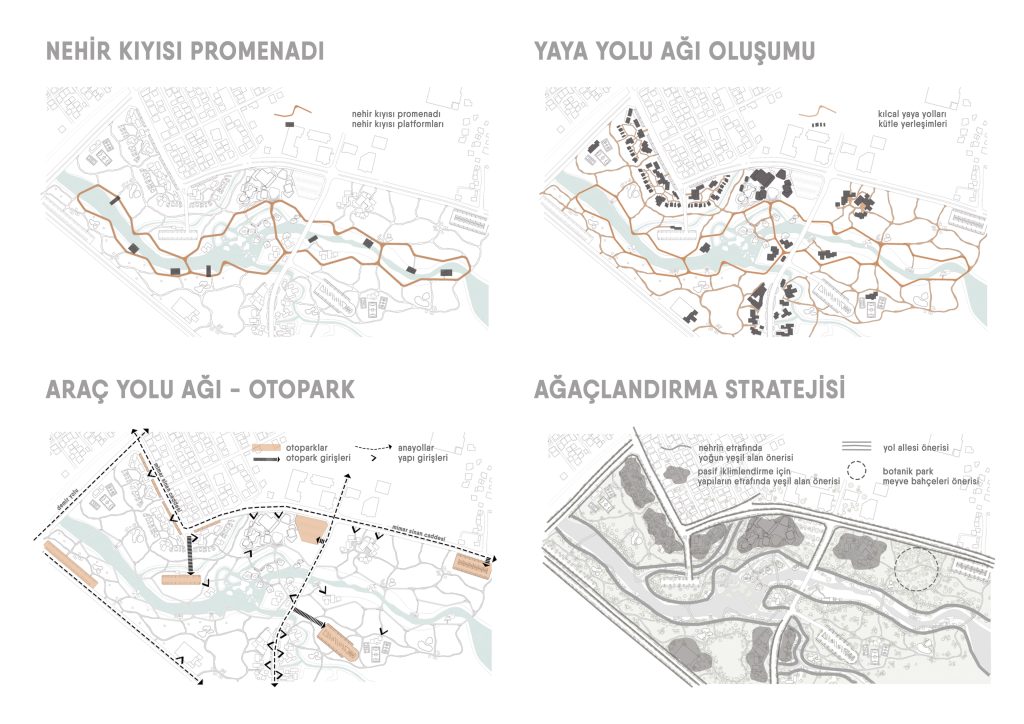
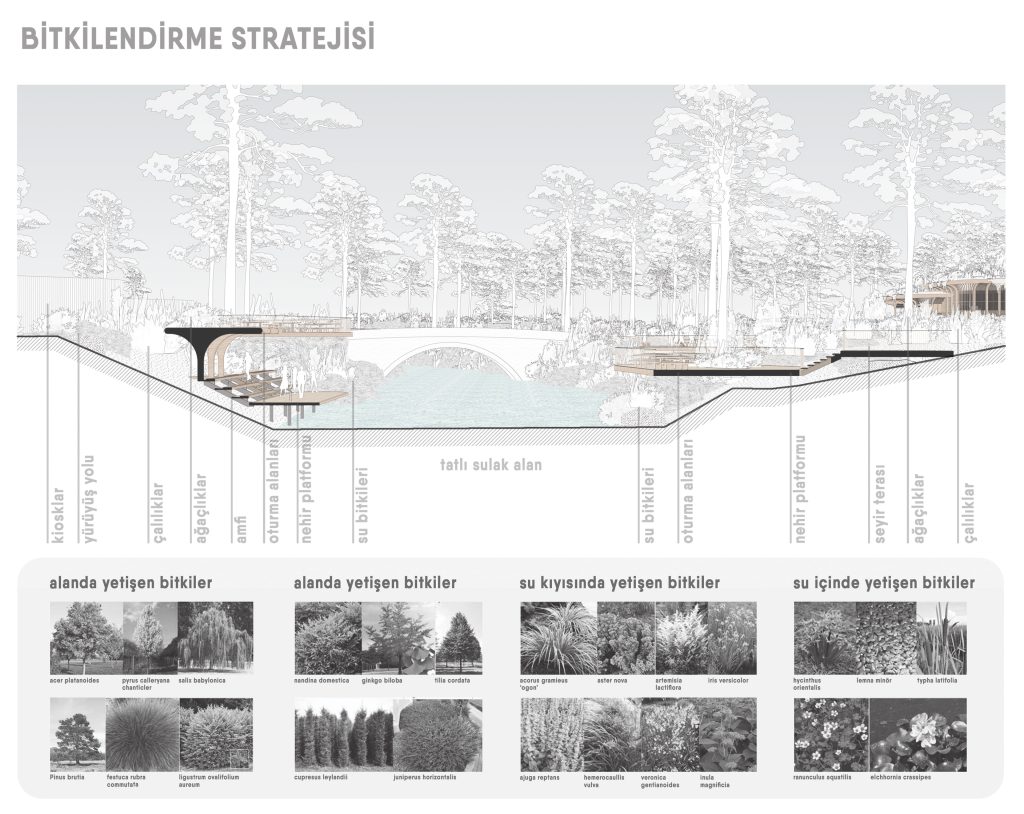
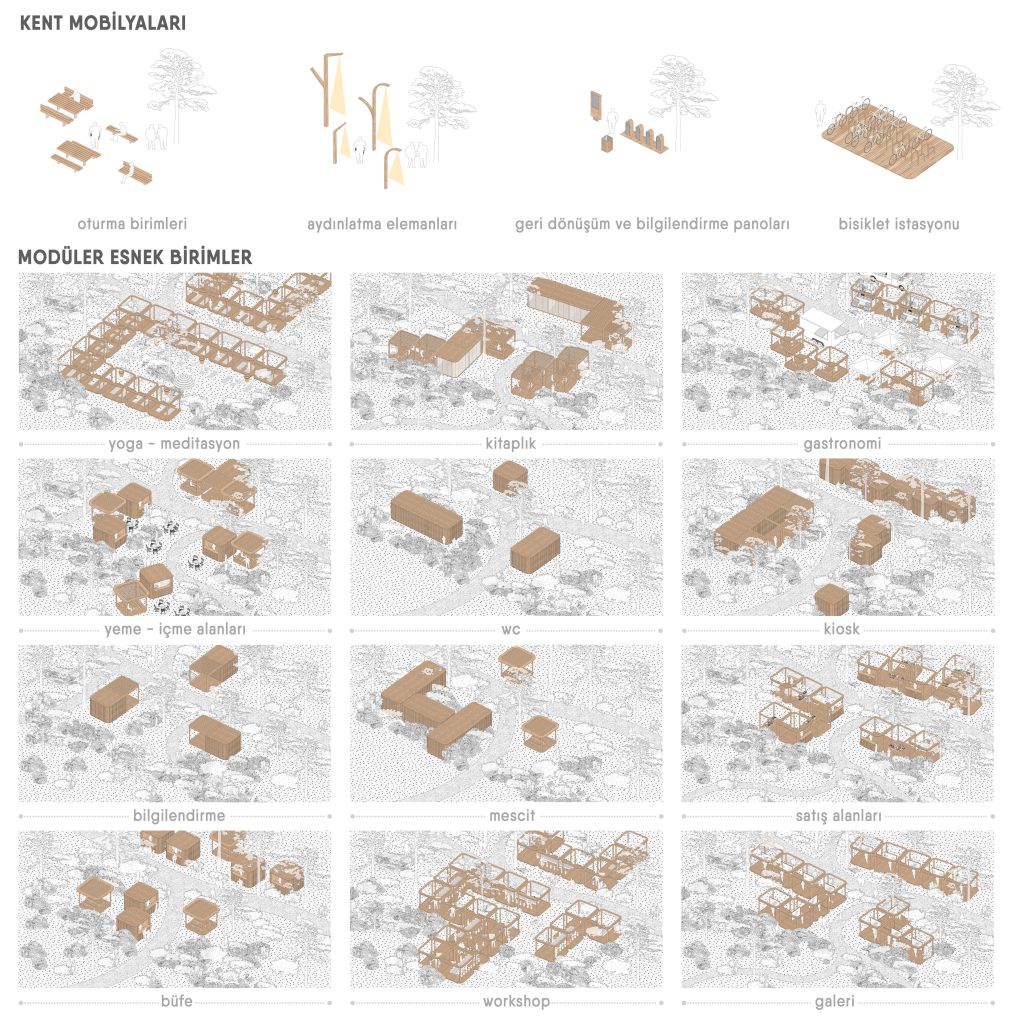
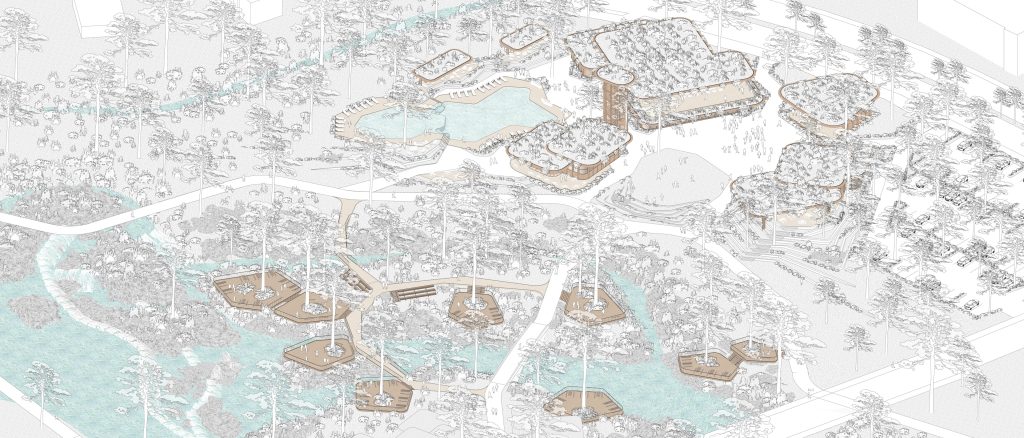
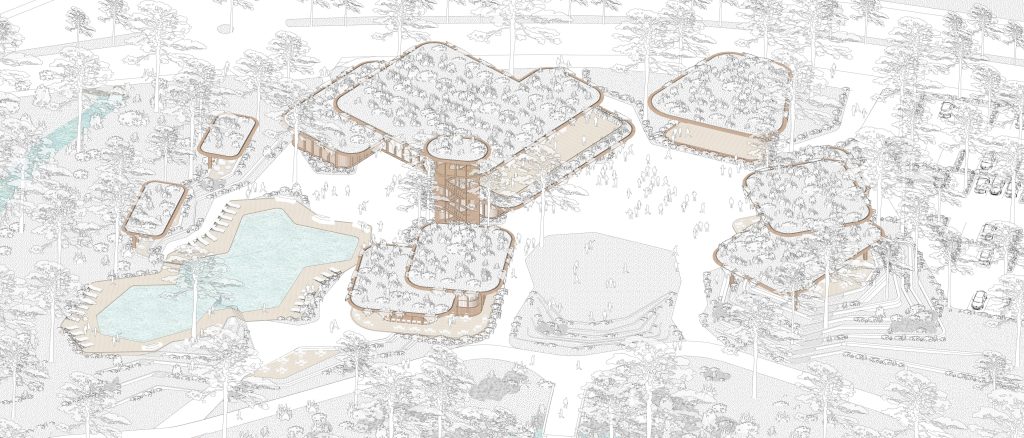
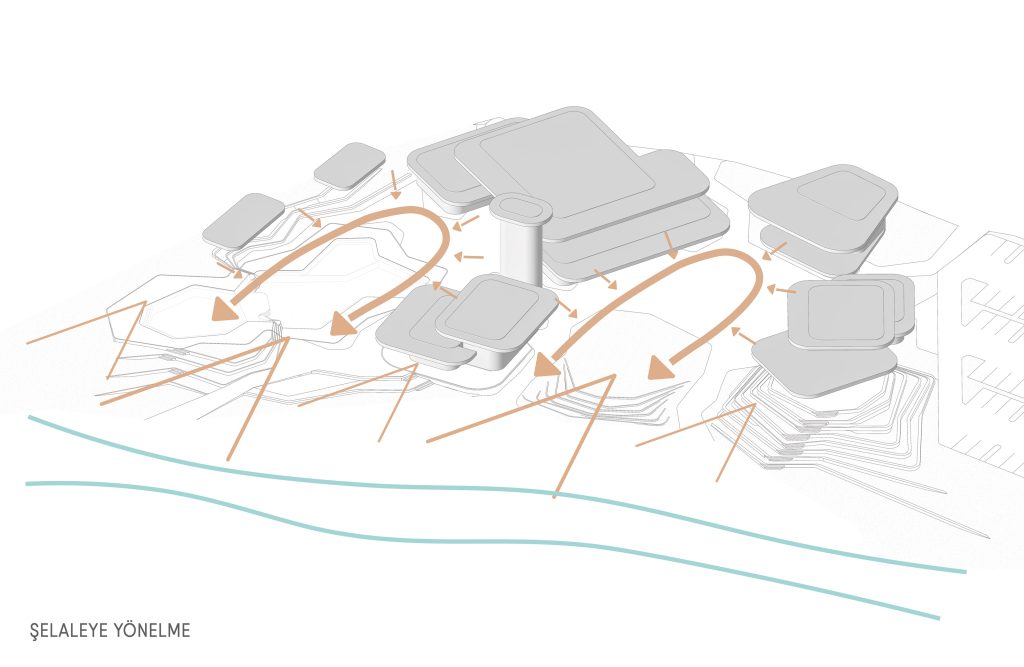
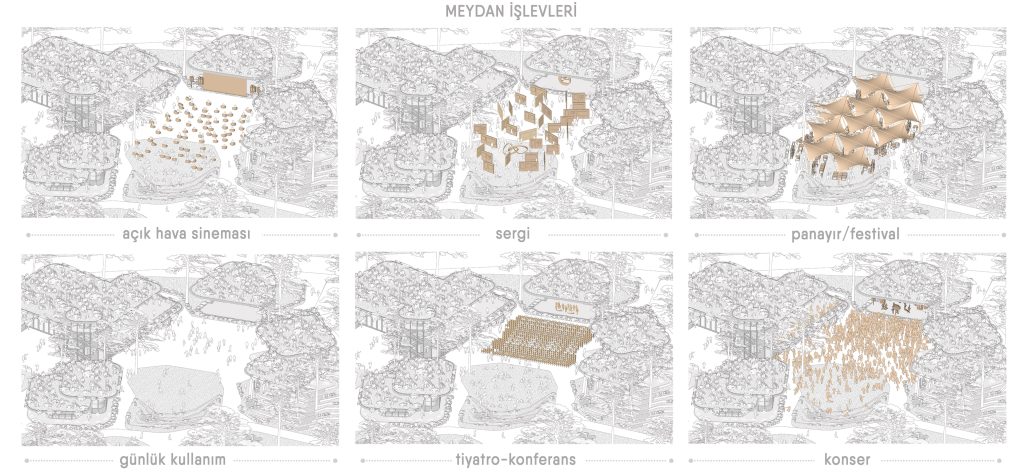
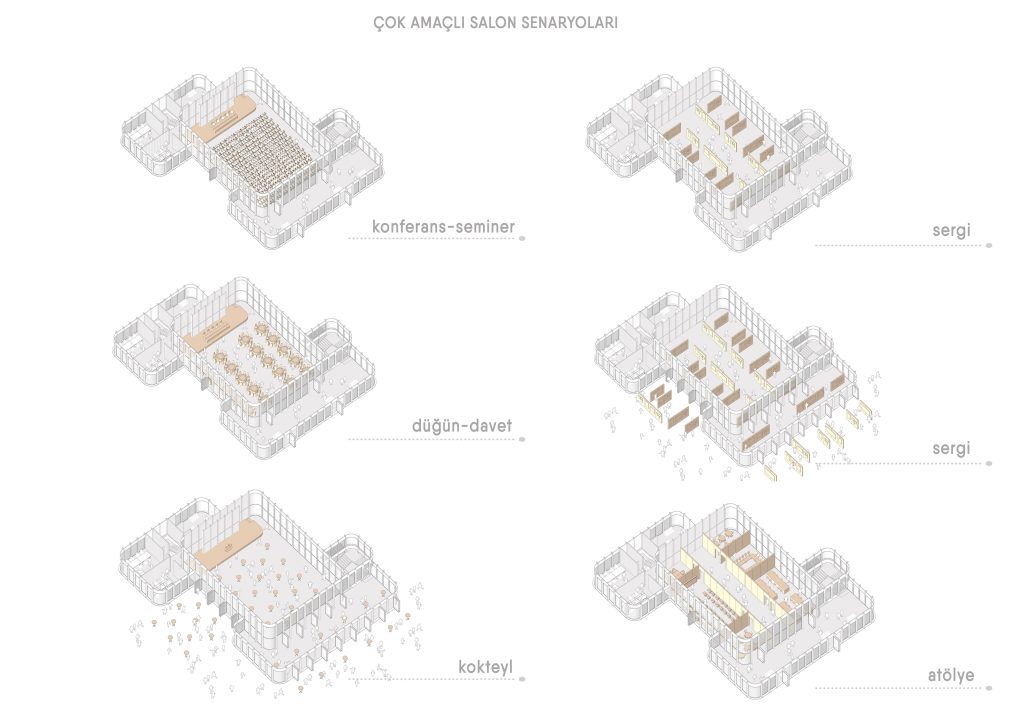
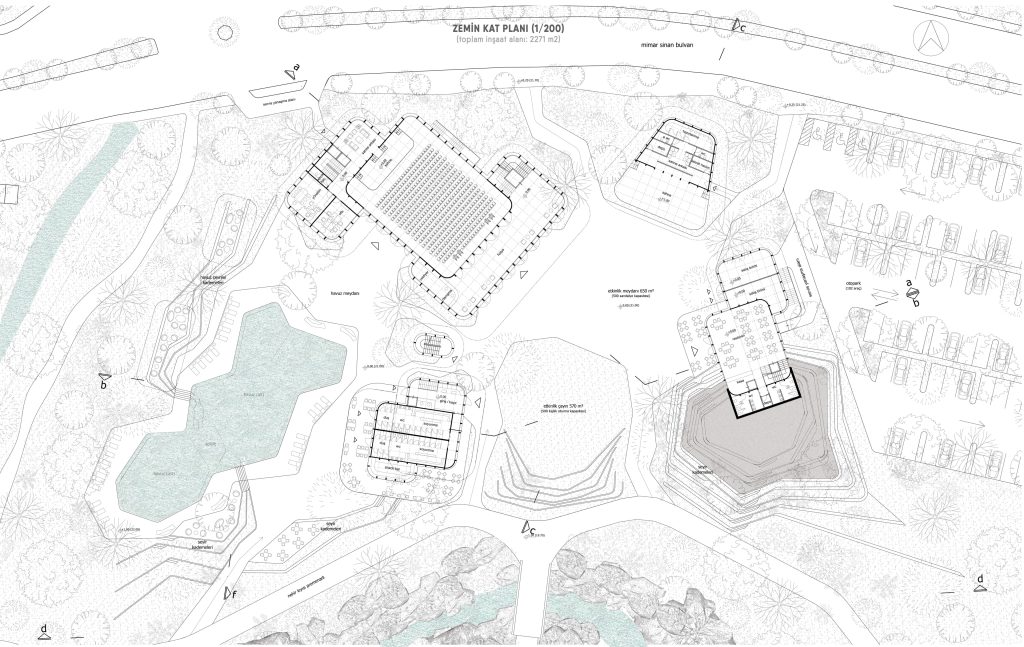
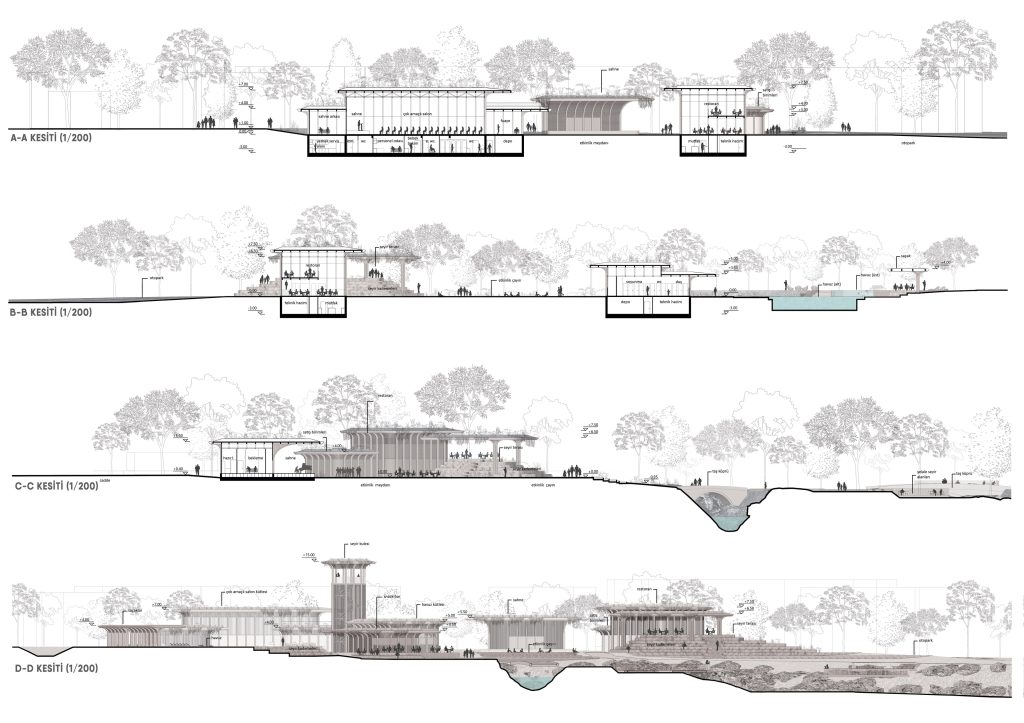
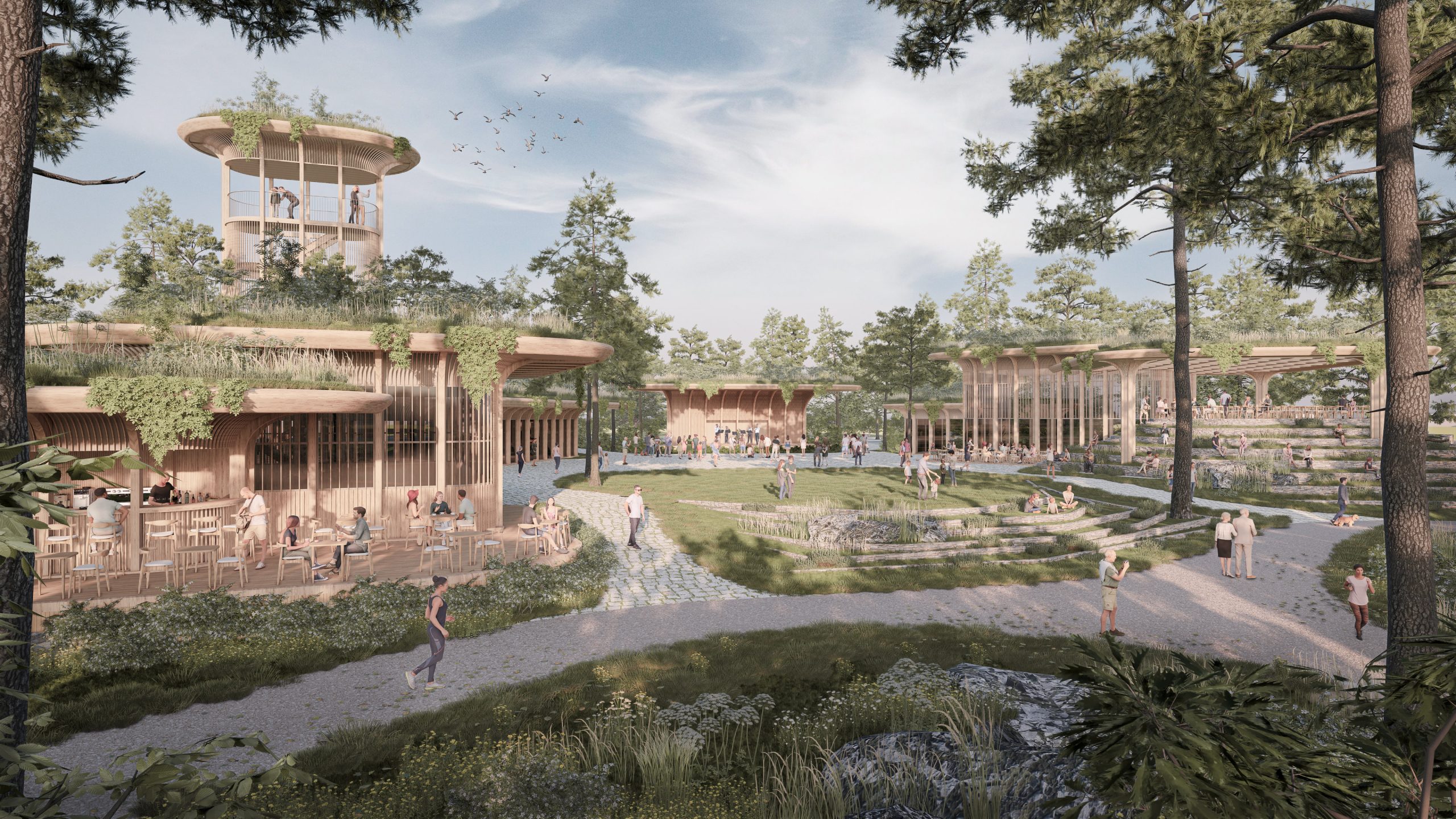
Human-scale masses are organized in a fragmented and organic layout across varying axes. This morphological structure allows the natural texture to seep through interstitial spaces, over roof planes, and into interior voids, ensuring the uninterrupted continuity of the landscape. At the core of the project, a multi-purpose event square and pool are positioned to overlook the waterfall from the upper elevation. Functional units are oriented toward the falls, defining the perimeter of this central hub. The elevation change between the building clusters and the water is articulated through terraced solutions, creating diverse vista points and experiential zones along the river.
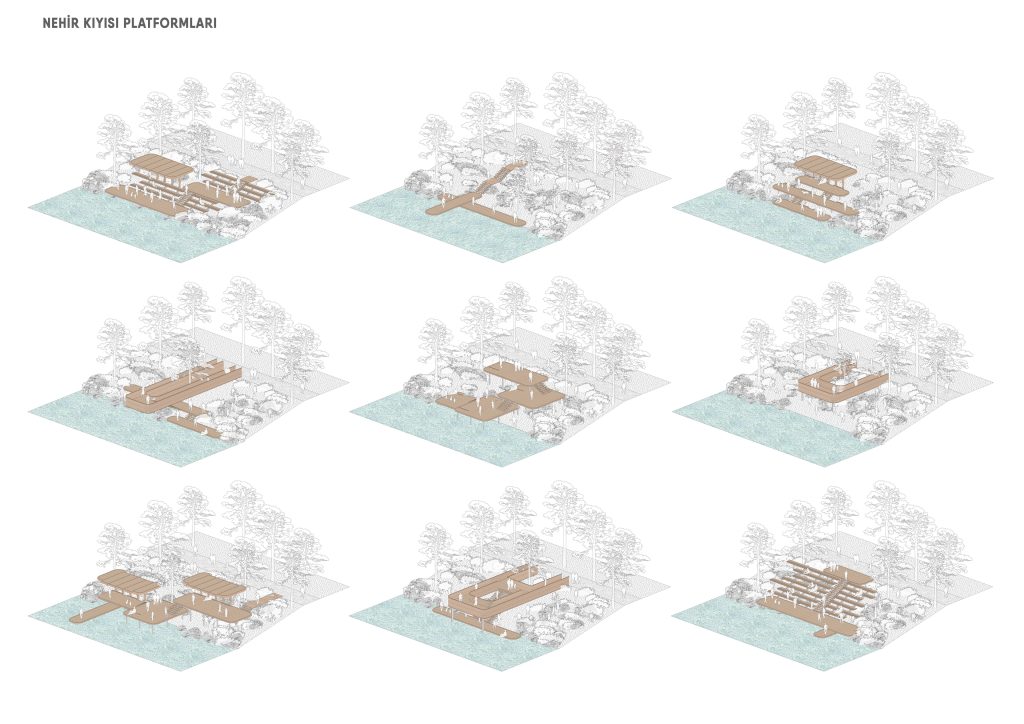
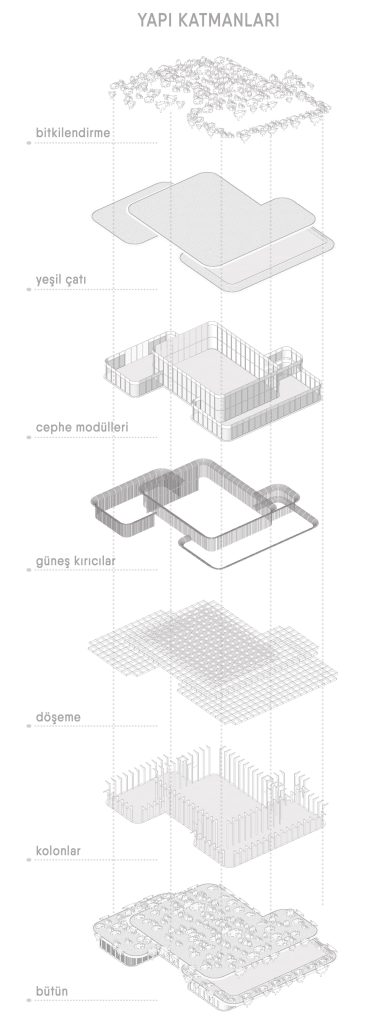
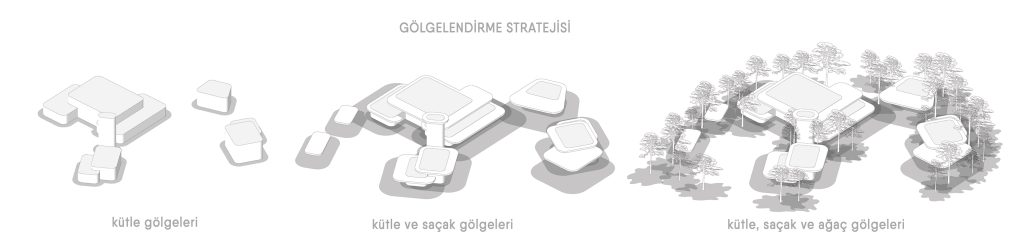
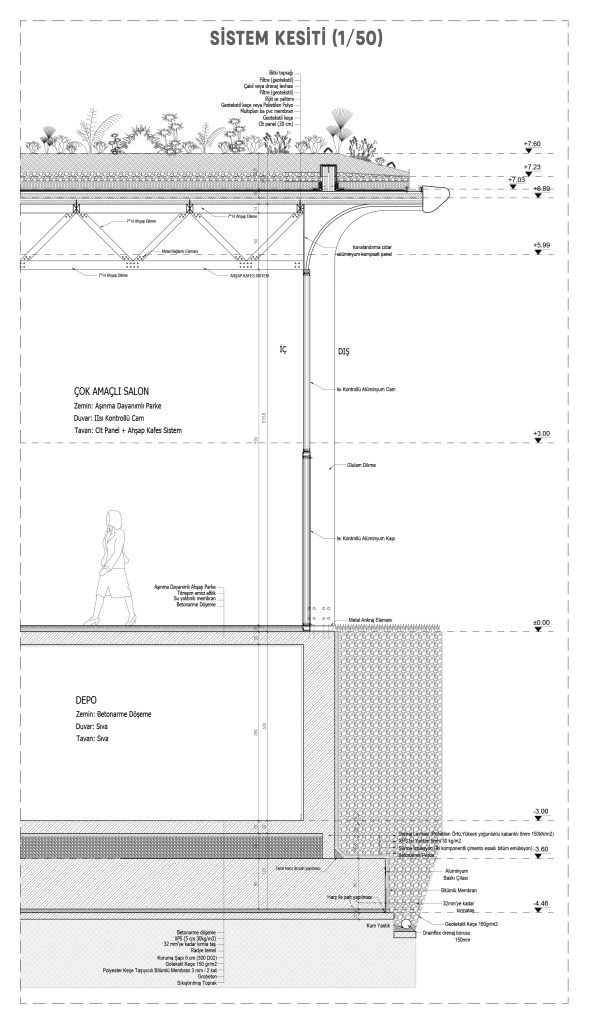
The structural system utilizes timber-based, modular, and sustainable constructions. This framework, providing flexibility in plan and façade configuration, is supported by adaptable mechanical infrastructures, reinforcing the project’s character that matures and adapts over time—much like the concept of “dem.” Wide canopies and preserved existing trees define shaded semi-open spaces, while platforms that overhang or retract along the river line allow the user to experience nature in its purest, most distilled form.